Sintesi
Polybutadienes are among the most important industrial polymers because they are widely used in products requiring high elasticity and durability such as automobile tires. Their performance depends heavily on microstructural composition, which results from 1,2- and 1,4-polymerization pathways. Reliable identification and quantification of microstructure during production is critical for ensuring product quality and consistency. Raman spectroscopy provides a fast and effective inline analysis with high reproducibility.
The benefits: Fast, reproducible polymer analysis with Raman spectroscopy
Up to 12
hours saved per analysis compared to ¹³C NMR
±1%
reproducibility
- Minutes instead of hours — Quantitative microstructural analysis can be completed in minutes, compared to up to 12 hours required for ¹³C NMR.
- ±1% reproducibility — Raman measurements provide highly reproducible results suitable for quality control and process monitoring.
- No sample preparation — Non-destructive measurement enables direct analysis without additional sample handling.
The challenge: Reliable microstructure determination
The importance of polybutadiene microstructure
Polybutadienes are among the most important industrial polymers, accounting for over 4 billion pounds of produced rubber. It has high resiliency, wear resistance, and mechanical strength, making polybutadiene ideal for high-wear applications such as tires, golf balls, and polymer additives.1,2,3 The mechanical function and resilience of a polybutadiene relies heavily on its molecular structure, or microstructure.
Polybutadiene microstructure
Polybutadiene has three main microstructures: 1,2-vinyl polymerization, 1,4-trans polymerization, or 1,2-cis-polymerization. The less important reaction is 1,2-polymerization and it is used as an additive in other polymer products to add stiffness. The product of 1,2-polymerization has a polyethylene backbone with a pendant vinyl group. The unsaturation is located on the side chain. The pendant vinyl group is on an asymmetric carbon atom, so the polymer can be isotactic, syndiotactic, or atactic. High-vinyl polybutadienes tend to be less thermally stable than those with lower vinyl content. The more important polymerization reaction of butadienes is 1,4-polymerization. This reaction is generated by anionic polymerization in non-polar solvent with alkyllithium initiators. The products of 1,4-polymerization retain a double bond in the backbone. The two possible products are 1,4-cis- and 1,4-trans-polybutadiene. 1,4-trans polymerization yields a rubber that is durable and resistant to wear because of the longer chains and location of the double bond on the chain backbone. 1,2-cis polymerization results in a more flexible rubber because the chain folds and prevents crystallization. The cis isomer has a lower Tm and Tg and lower crystallinity than the trans isomer and is an excellent elastomer. High cis polybutadiene exhibits excellent cut growth resistance (resistance to the expansion of a cut, tear, or crack when the material is in use), which is especially important in tires. In most systems, different reactions occur and the product contains a mixture of structure types.
Analytical challenges to measuring polybutadiene microstructure
Quick, accurate, and real-time identification of the microstructure enables in-process corrections and timely additions of catalyst if the reaction is stalled. For this reason, thermal, chromatographic, and spectroscopic techniques are used for laboratory microstructure measurements. Inline or at-line measurement of polybutadiene microstructure of polybutadienes presents several analytical challenges that make it difficult to obtain fast, reliable data for process control or routine quality assurance. Several spectroscopic methods have been used to determine microstructure in polybutadiene samples including 1H and 13C NMR, IR, and Raman spectroscopy. By comparing different spectroscopic methods, Frankland et al. showed that only 13C NMR and Raman yield reproducible, accurate results.2
Our solution: Raman spectroscopy for microstructure analysis
Raman spectroscopy of polybutadiene
Raman spectroscopy is especially useful for characterizing polybutadienes because the ν(C=C) bond stretching of 1,2-vinyl, 1,4-cis, and 1,4-trans units are strong Raman scatterers. These vibrations generate strong Raman bands at 1639, 1650, and 1664 cm–1, respectively. Because Raman scattering intensity is directly proportional to sample concentration, the intensities of these bands can be used for quantitative analysis of a polybutadiene sample. Because the bands overlap, multivariate analyses or curve fitting techniques are normally employed to obtain accurate measurements of band areas.
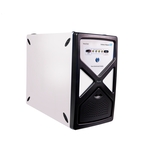
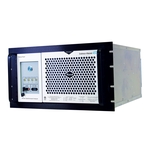
Raman spectra shown in Figure 1 were acquired with a Raman analyzer, using a 785 nm NIR laser and three averaged 5 second acquisitions. The 1600-1700 cm-1 region was used to identify the microstructure of polybutadiene. The technique detects strong vibrational signals from carbon–carbon double bonds, with distinct spectral bands corresponding to each structural unit:
- 1,2-vinyl: ~1639 cm⁻¹
- 1,4-cis: ~1645 cm⁻¹
- 1,4-trans: ~1669 cm⁻¹


In samples where there are blends of microstructures, the bands can overlap. Because Raman scattering intensity is proportional to concentration, these signals enable quantitative determination of polymer composition. Overlapping bands can be deconvolved using standard curve fitting and multivariate analysis to provide accurate characterization. In one example, curve fitting was performed on polybutadiene mixtures and resulted in accurate measurement of the 1,4, 1,2-vinyl, and 1,2-cis polymers with demonstrated reproducibility to within ±1%.2 The sampling options were compatible with in situ process monitoring.
Raman measurements are rapid, can be installed directly inline, and are compatible with automated DCS, PLC, or SCADA process automation platforms. Raman spectroscopy provides a powerful and efficient method for characterizing polybutadiene microstructure for inline process monitoring and control.
Conclusion
Raman spectroscopy is the clear choice for determining the microstructure of polybutadiene samples, especially for process applications. It is sensitive to the concentrations of all three major types of polybutadienes and yields useful, quantitative information in seconds with excellent reproducibility.
References
- International Institute of Synthetic Rubber Products (IISRP). “What is Synthetic Rubber?” http://www.iisrp.com/synthetic-rubber.html (accessed March 2003).
- Frankland, J.A.; Edwards, H.G.M.; Johnson, A.F.; Lewis, I.R.; Poshyachinda, S. “Critical assessment of vibrational and NMR spectroscopic techniques for the microstructure determination of polybuta-dienes.” Spectrochimica Acta, Vol. 47A, 1991, 1511.
- Yoskioka et al. Pure & App. Chem., Vol. 58, No. 12, pp. 1697—1 706, 1986.