Optimize cement preheater performance with precise measurement solutions
Cement preheater optimization requires precise measurement of temperature, pressure and gas composition to maintain stable process conditions and prevent operational disturbances.
Driving cement preheater optimization for consistent clinker production
Reliable preheater performance plays a key role in achieving stable clinker quality and improving thermal efficiency across cement production. Heat transfer dynamics, gas flow behavior and material movement across cyclone stages determine how effectively the system conditions the feed before it reaches the kiln. Even minor imbalances can reduce separation performance, increase heat losses and disturb downstream operation.
Sustained uptime depends on continuous tracking of temperature, pressure and material flow throughout the tower. Precise cyclone monitoring provides early visibility into flow restrictions, draft imbalance and emerging buildup, enabling timely intervention and more predictable conditions. The following sections show how targeted solutions improve heat transfer, support preheater blockage prevention and enhance process control while enabling traceable data and integrated industrial automation.
Process overview
Explore improvement potential in preheater operation
See how targeted measurement improves control of the preheater stage of the cement process.
Optimize thermal profile and preheater energy efficiency
Effective heat transfer across the preheater tower is essential for maximizing thermal capability and ensuring consistent clinker production. Temperature profiles, gas–meal interaction and heat recovery determine how effectively thermal energy is transferred from the gas phase to the raw meal. Even small deviations in temperature distribution or gas flow reduce heat exchange quality and increase overall energy consumption.
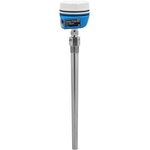
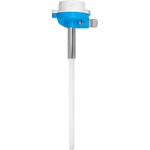
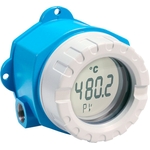
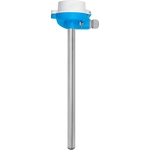
Improve temperature profiles to enhance thermal performance: Temperature measurement with iTHERM TM152 and iTHERM TM142B provides clear insight into gas–meal interaction across cyclone stages, helping detect thermal imbalance and limit heat loss
Detect temperature deviations that reduce heat recovery: High‑temperature thermocouples TAF11 and TAF16 deliver accurate insights across cyclone stages, helping identify uneven heating and declining thermal output
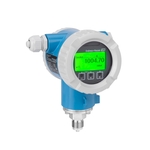
Track pressure changes that influence heat transfer behavior: Cerabar PMC71B provides reliable visibility into process conditions, enabling operators to maintain consistent heat transfer and improve overall energy performance
Material flow across the preheater tower plays a critical role in maintaining smooth operation and preventing blockage formation. Accumulation in dip tubes, risers and cyclone stages disrupts gas–solid interaction, increases pressure losses and reduces separation efficiency. Early detection of material imbalance helps prevent shutdowns and ensures stable feed to the kiln.
Detect buildup early to prevent cyclone blockage formation:Gammapilot FMG50 enables continuous detection of material accumulation in dip tubes and risers, helping operators identify blockage risks before flow is restricted
Track pressure rise linked to material accumulation: Cerabar PMC71B reveals increasing resistance across cyclone stages, supporting early detection of buildup and flow restrictions
Maximize your safety in the preheater stage: Utilize source container FQG61 provides safety when using radiometric monitoring to prevent cyclone blockage formation
Remotely maintain your instrumentation: with Field Xpert SMT50B featuring remote connectivity to enable you to keep your devices operational whilst maintaining physical safety
Gas composition and process conditions across the preheater system influence combustion characteristics, chemical reactions and overall process stability. Variations in gas composition, volatile cycles and airflow conditions directly impact material flow, separation quality and downstream kiln operation. Continuous monitoring enables early identification of disturbances and and strengthens preheater process control.
Track process gas composition to understand reaction conversion: Process gas analysis with MKAS provides reliable measurement of O₂, SO₂, CO and NO and other components, helping interpret combustion conditions and their impact on preheater use
Correlate gas trends with overall process performance: Integrated data analysis with Netilion enables linking gas composition, pressure and temperature trends, supporting improved system integration and industrial automation
FAQ
Frequently asked questions on efficient preheater operation
Learn how targeted preheater monitoring and accurate data prevent blockages, improve gas analysis and enable more efficient preheater operation.
Endnoten
Might also interest you
Clinker production: Driving energy efficiency & emission reduction
Explore how stable clinker production improves energy efficiency, reduces emissions and supports compliance with evolving environmental requirements.
Improve rotary kiln stability through precise combustion control
Understand how process drivers, disturbances and measurement challenges influence rotary kiln stability, combustion control and clinker production performance.
Wir respektieren Ihre Privatsphäre
Wir verwenden Cookies, um Ihr Erlebnis auf unserer Website zu verbessern, die Funktionalität durch Statistiken zu optimieren und Ihnen individuell angepasste Werbung oder Inhalte anzubieten.
Mit „Alle akzeptieren“ gestatten Sie uns den Einsatz von Cookies.
Weitere Informationen finden Sie in unserer Cookie-Richtlinie .